Hard-wax oil finishes.
Bona Craft Oil and Osmo Polyx. A natural matt look that lets the grain breathe, repairable in patches without re-sanding, walkable the same evening it's applied.
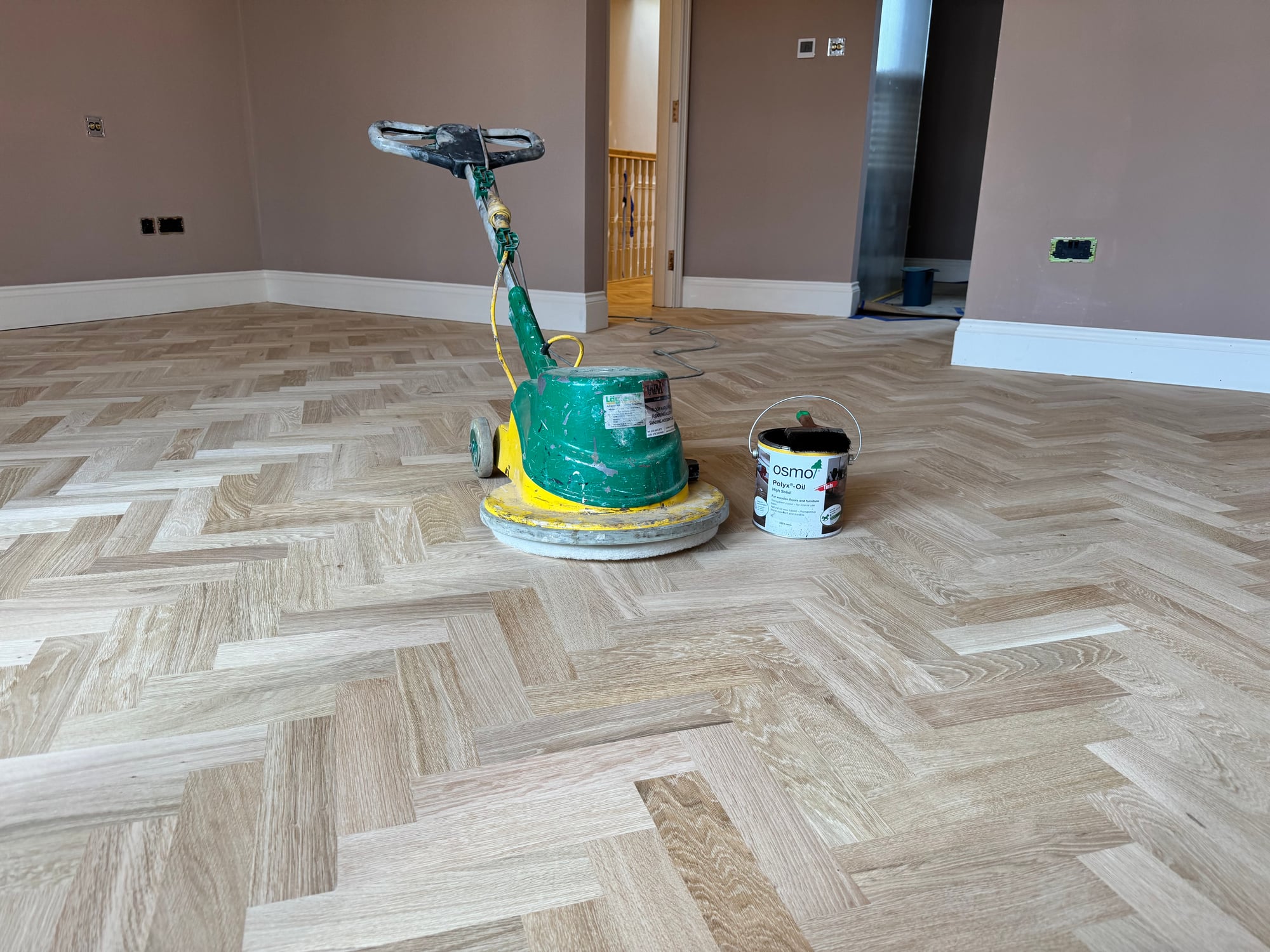
Bona Craft Oil and Osmo Polyx. A natural matt look that lets the grain breathe, repairable in patches without re-sanding, walkable the same evening it's applied.
Hard-wax oils sit somewhere between an old-fashioned oil and a modern lacquer. The oil soaks into the timber, the wax cures on top, and what you end up with is a surface that protects the wood without coating it in plastic. The floor still looks and feels like wood, matt, slightly textured, warm underfoot.
The other reason we use them: they repair without a full sand-back. Scratch a lacquered floor and you've got a permanent mark until the whole room is re-sanded. Scratch a hard-wax oiled floor and we can spot-treat the area with the same oil and feather it in. For family homes and high-traffic kitchens, that's a quiet but real advantage.
Two-component oil with hard-wearing finish, low VOC and a natural matt sheen. Our default for living spaces.
German hard-wax oil, food-safe once cured, matt. The classic for parquet and traditional boards.
Buffed between coats for an even finish. Most floors take two coats; busy rooms get a third.
Spot repairs without re-sanding the room. Big practical advantage for kitchens and hallways.
Hard-wax oils need a slightly more open grain than lacquer. We finish-sand to 100-120 grit for best absorption.
Oil applied evenly and given full dwell time to penetrate the timber. Excess removed by hand.
Buffed between coats with a white pad, then a second (and sometimes third) coat to build protection.
Lacquer sits on top of the wood as a film. Hard-wax oil soaks in and cures within the timber. Oils look more natural; lacquers are typically harder-wearing. Both are valid choices, it depends on the room.
Yes. Polyx and Craft Oil 2K are food-safe once cured. The advantage in a kitchen is that the inevitable scratches and spills can be spot-repaired rather than living with permanently.
High-traffic rooms benefit from a maintenance coat every 3-5 years. Bedrooms and low-traffic spaces last much longer. A maintenance coat is a quick job, no re-sanding.
Yes. Hard-wax oils cure on contact with air, so the floor is walkable the same evening, with full cure over a week.
We come out, take measurements, talk through finishes and follow up with a detailed quote. No deposit, no obligation.
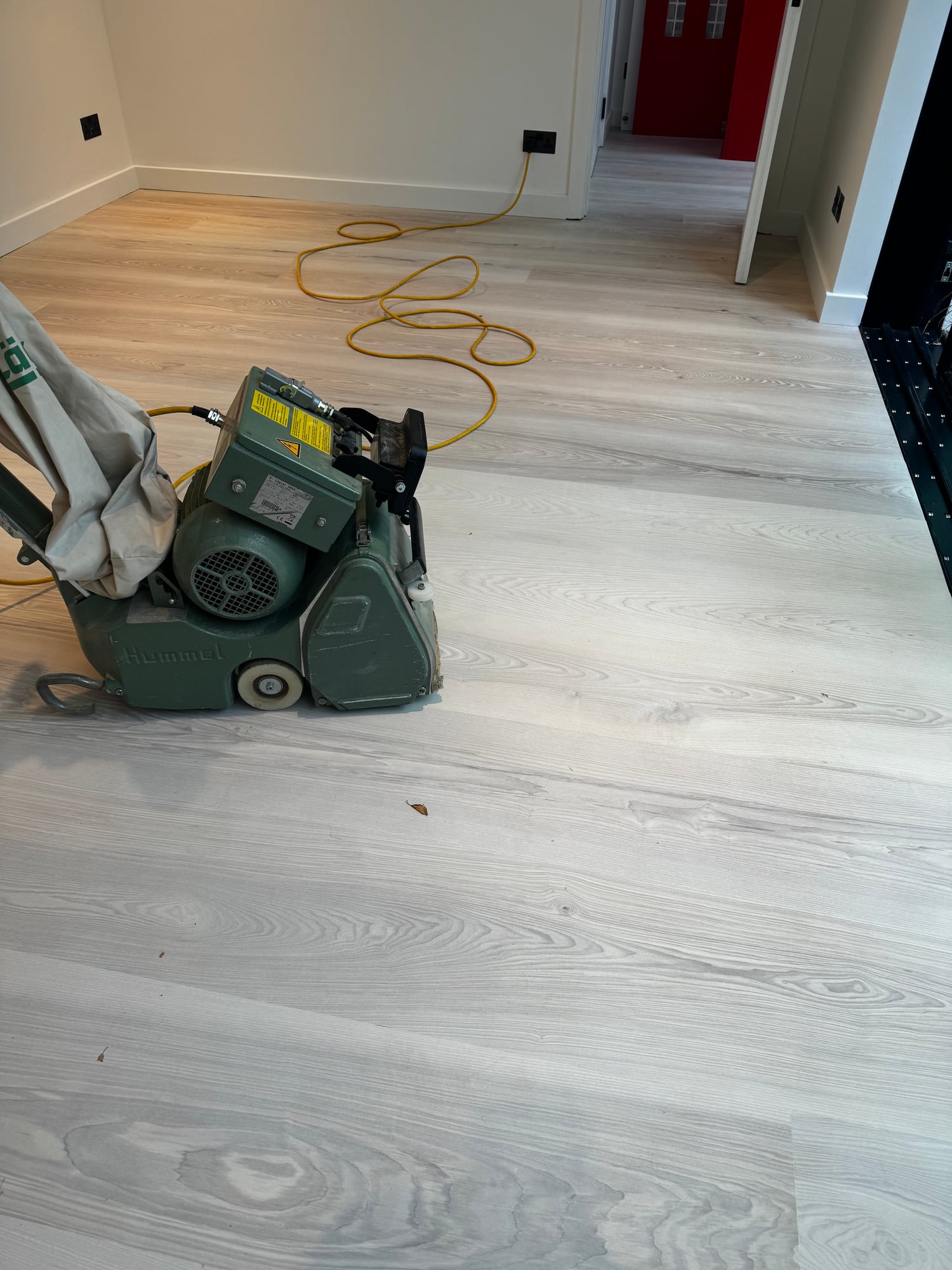
We sand worn, scratched and faded wood floors back to bare timber, then refinish them in Bona or Osmo. Sealed dust extraction, our own in-house team, and a free survey and quote.
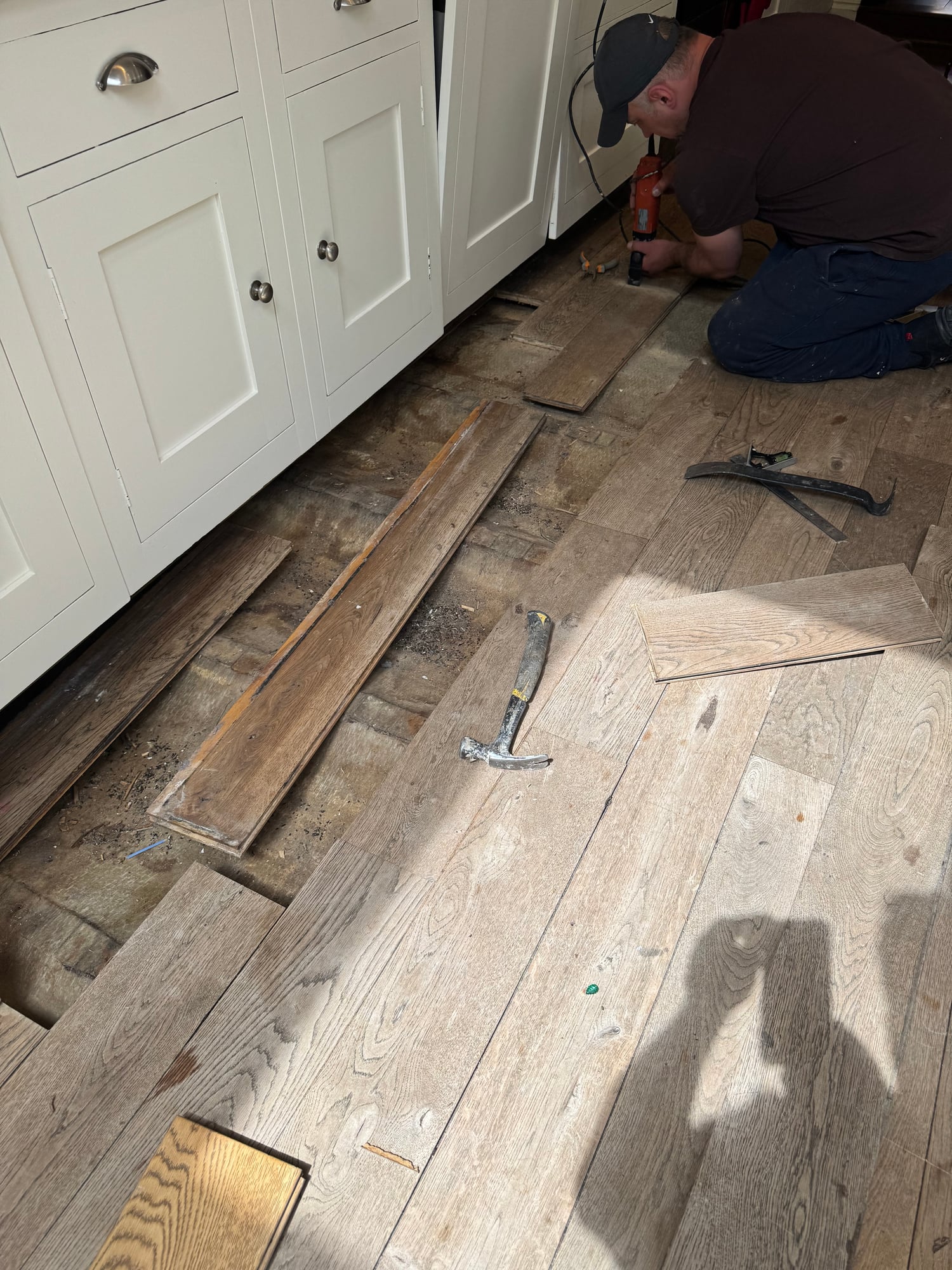
Resin-and-dust slurry for narrow gaps, slivered pine for wider ones, board swaps for water damage. We finish so the repair is invisible once the floor is sealed.
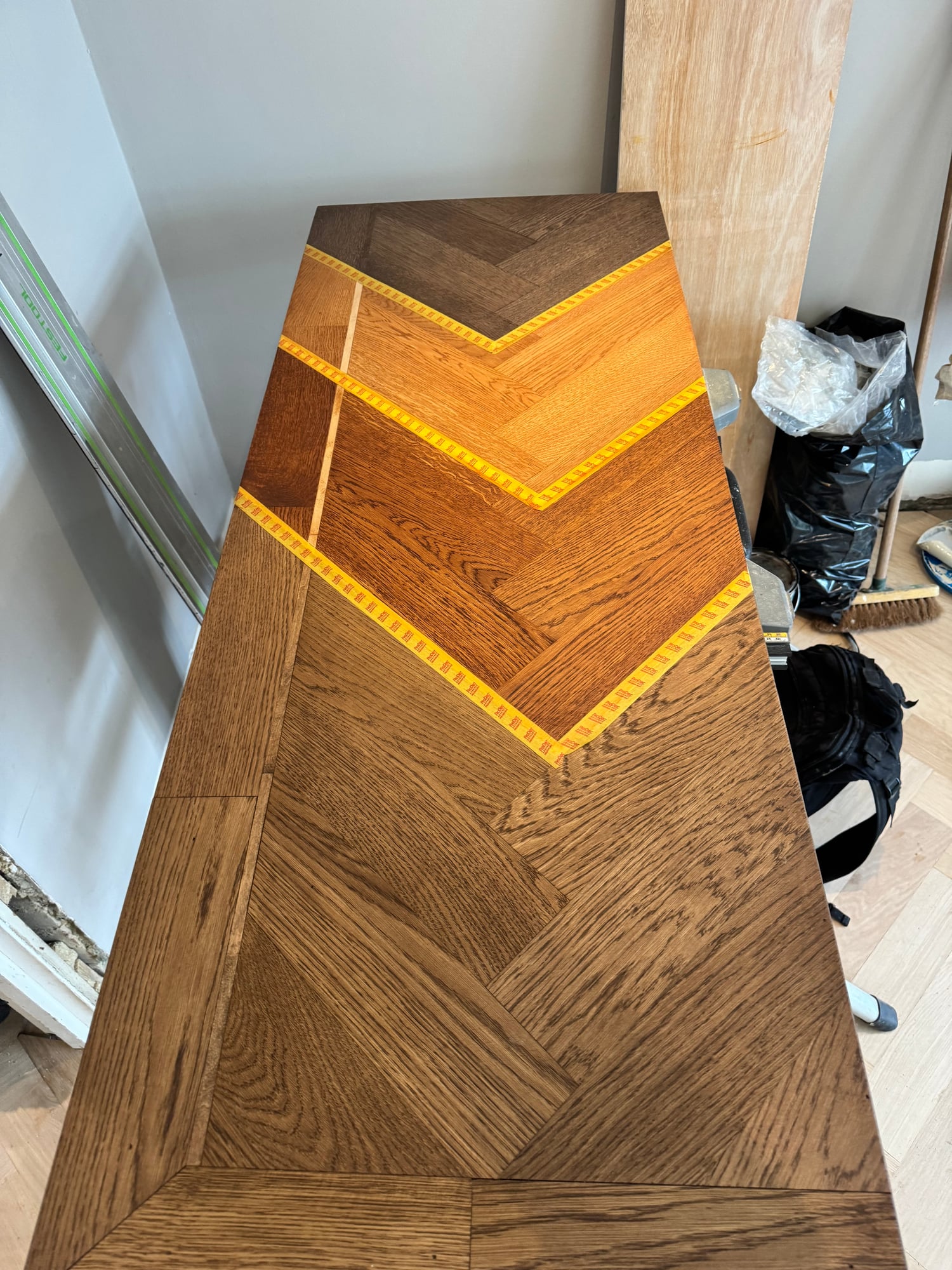
Scandinavian whites, fumed oak, smoked walnut, deep ebony. We bring sample boards into your home so you choose the colour with your own light, your own walls and your own floor.
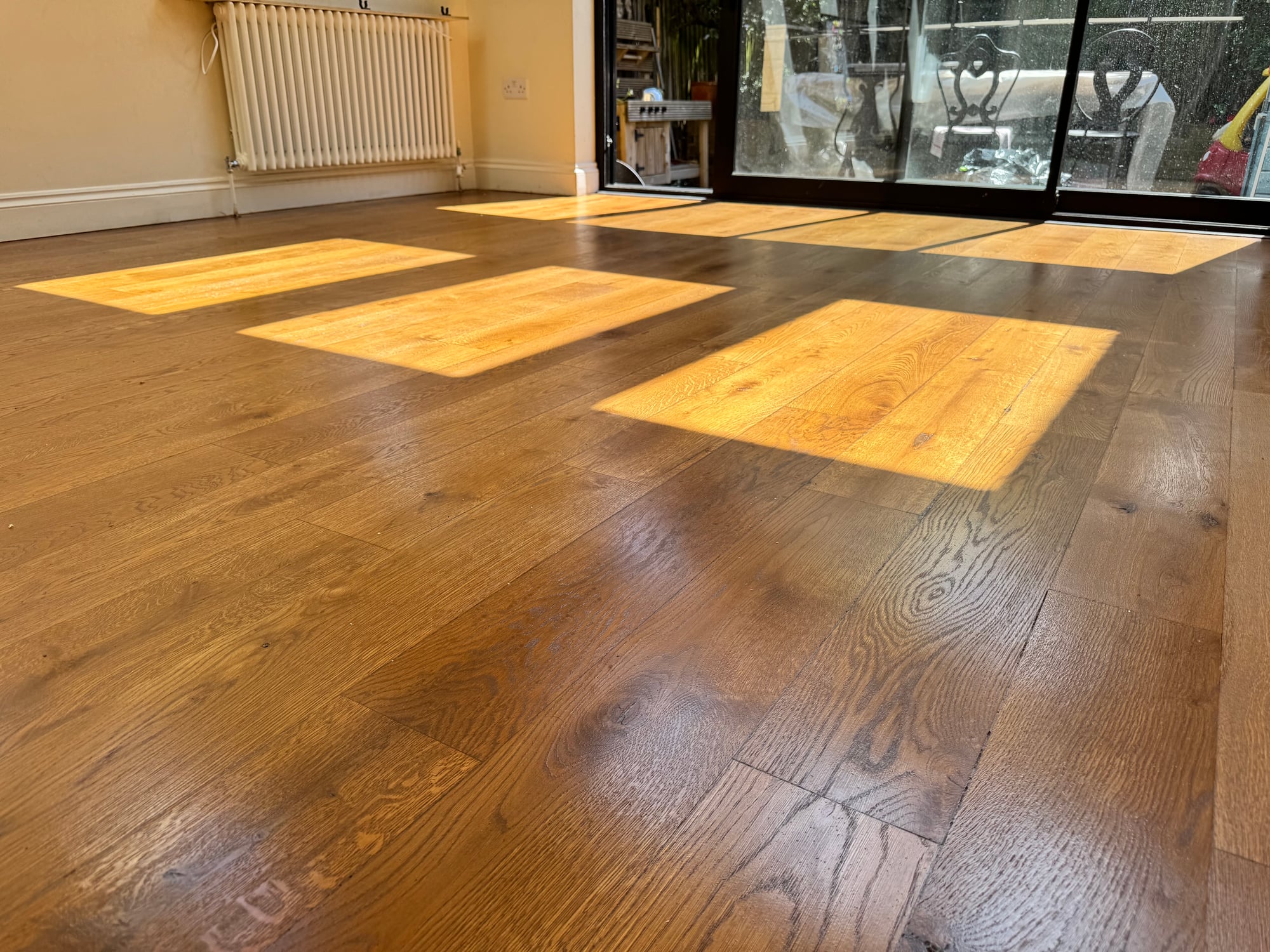
The toughest commercial-grade lacquer on the market. Used in hotels, galleries and listed buildings, low-VOC and walkable in 12 hours.
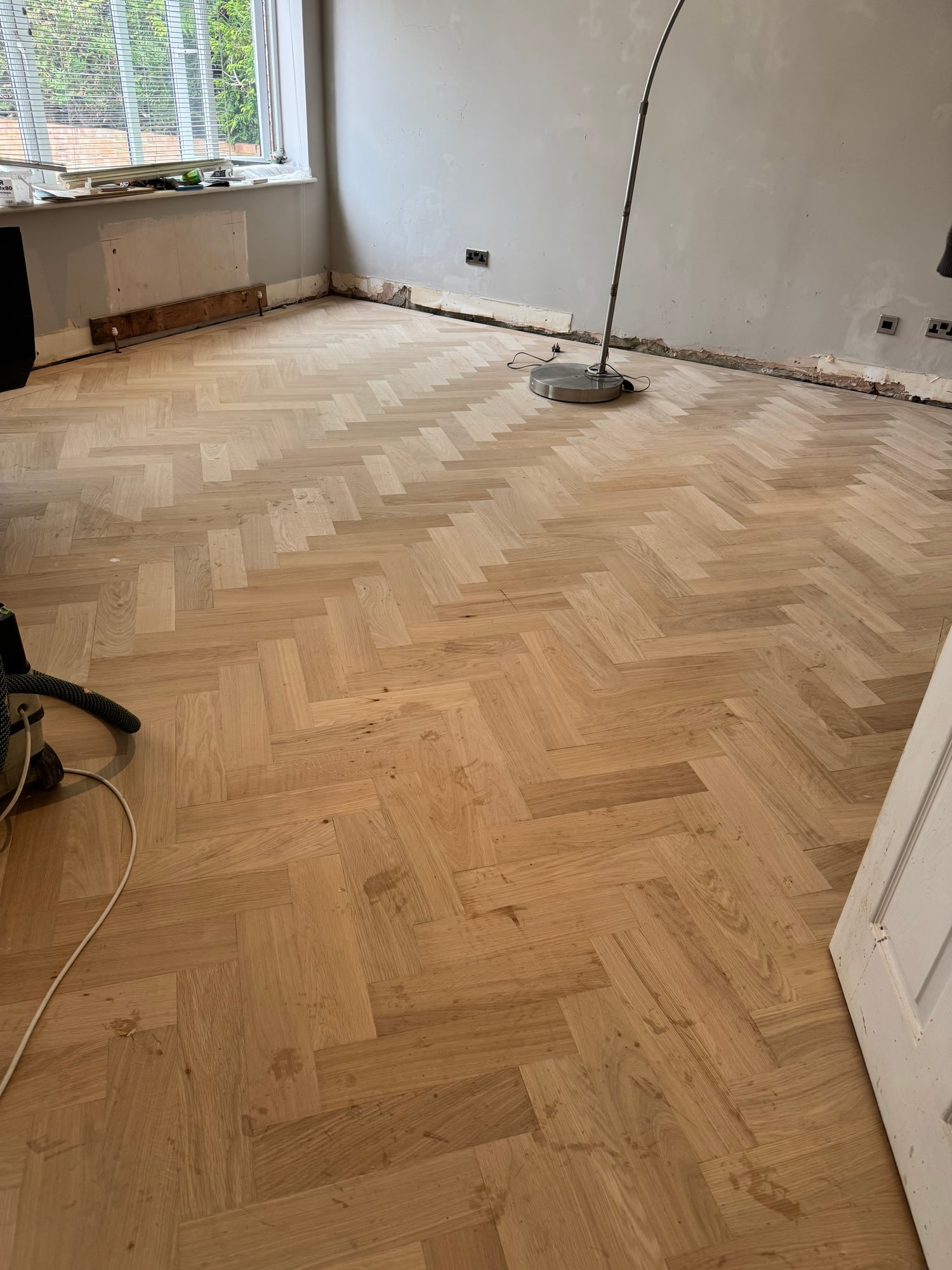
Lifting, re-gluing, levelling and refinishing original blocks. Herringbone, chevron, basket-weave and field-and-border. Listed-building experience.